
Harm van den Dorpel at Art Basel Miami Beach 2026
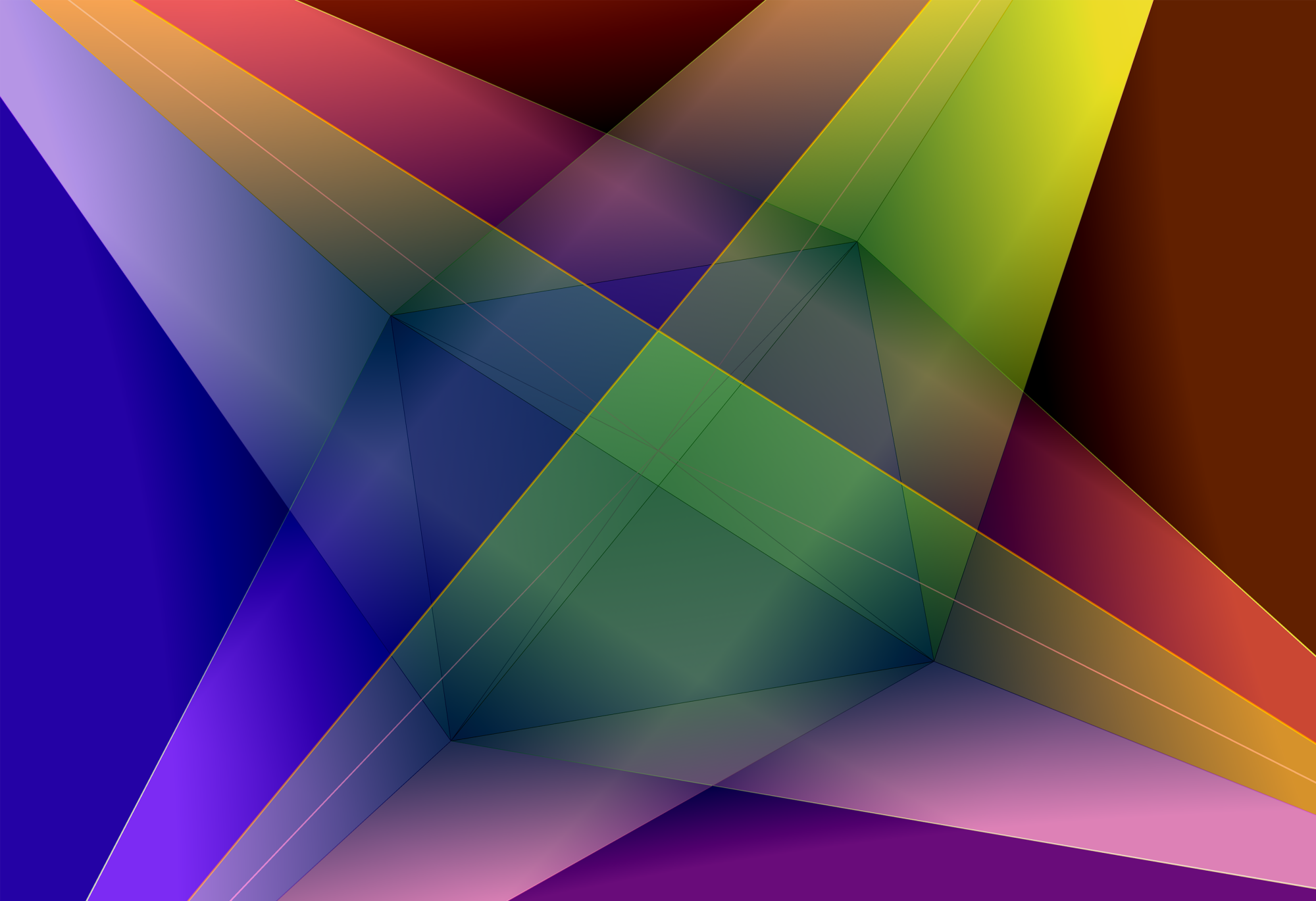
Harm van den Dorpel will present Entfaltung, a new series of generative works on screen and on paper, at Art Basel Miami Beach 2026. The presentation is a joint project of Interface Gallery and Lohaus Gallery and is part of Generation, the second Miami Beach edition of Zero 10, Art Basel's global initiative for art of the digital era. Generation is curated by Karen Archey with Eli Scheinman and brings together 19 projects presented by 22 galleries and platforms. Art Basel named Entfaltung among the highlights of the sector in its exhibitor announcement of September 29.
Archey says the exhibition's title "points towards a productive double meaning: to 'generation' as the computational process through which images, forms, and experiences are produced, and to a new generation of artists reckoning with the systems and imaginaries of the digital age." Van den Dorpel's presentation adds the generations that came before. Its argument is that contemporary generative art belongs to a historical continuum, and that the continuum shows once the work is judged by the rigour of its concepts and not by the technology it runs on. Some of the artists he traces it back to, such as Anni Albers and Emma Kunz, worked by hand and without a computer. Others, such as Vera Molnár and Manfred Mohr, were among the first artists to use one, from the late 1960s. What connects them to each other and to generative art today is method: systematic rules, an input the artist does not control, and the rigour with which the rules are carried through.
I want to embed my work within this historical lineage, freeing digital art from technological novelty.
The lineage has been the subject of his research since 2019. He reconstructs the procedures these artists followed and writes new algorithms from them, a method he calls algorithmic archaeology. He exhibited that research in Angles Morts (Lohaus Sominsky, Munich, 2024), where his plotter drawings were shown beside works by Molnár, and in Cloud Writings (Takuro Someya Contemporary Art, Tokyo, 2026). Both exhibitions worked on the two-dimensional grid. Entfaltung takes the same research into three dimensions and time.
Entfaltung is German for unfolding. The series starts from the drawings of the Swiss healer and artist Emma Kunz (1892–1963). Kunz worked on graph paper with a pendulum: she posed a question, read the swings as points and directions, connected the points by a fixed procedure, and filled the slivers between the intersecting lines with coloured pencil. Van den Dorpel first rebuilt her radial constructions in code, so that the program repeats how she drew. He then turned them into a generator whose settings, such as point count, symmetry and fill, produce a family of figures, most of which Kunz never made. In the third step the points leave the page and become points in space, where every viewing angle gives a different drawing of the same object. In the fourth they start to move.
The points of a work and the connections between them never change. Only their positions do. Each work is one structure that passes through a succession of shapes while remaining topologically identical to itself, and this is what the title refers to. Van den Dorpel places the series in the lineage of Manfred Mohr, who from the 1970s rotated a rigid hypercube and projected it onto the plane. Mohr's object stays rigid and only its orientation turns. In Entfaltung the points themselves travel, so the object deforms.
Every practice in this lineage needs an input the artist does not decide. Kunz used the pendulum to take her own will out of the drawing. She said she channelled her compositions from a higher order, with the pendulum as her instrument. Van den Dorpel treats the large language model in the same way, as a channelling device. He developed the drawings in sustained conversation with one, analysing Kunz's geometric strategies and the different ways they could be transformed into space and time. A language model is trained on the collective corpus of human knowledge, and it answers from a source larger than any individual. He compares that source to what Carl Jung called the collective unconscious: a layer of the mind that is shared by everyone and authored by no one.
The finished works take their readings from a second shared source, the Ethereum blockchain. A new block arrives roughly every twelve seconds, and its hash moves the points into a new configuration. It is a reading that every participant in the network receives at the same moment and that no one controls. The works exist entirely on the blockchain and are computed live, so nothing is pre-rendered and no sequence repeats.
What Kunz fixed on graph paper, I set in motion. It is a living drawing, computed in real time. I pre-render nothing, and it never repeats.
Alongside the screen works he shows drawings on paper. A pen plotter draws the line construction directly onto the sheet, and van den Dorpel then fills the slivers by hand in coloured pencil, the way Kunz did.